Historic photographs and printed images of the American West, brought forward rather than left behind. The West, Reframed uses color, scale, typography, and contemporary intervention to give the archive a new life in the 21st century.
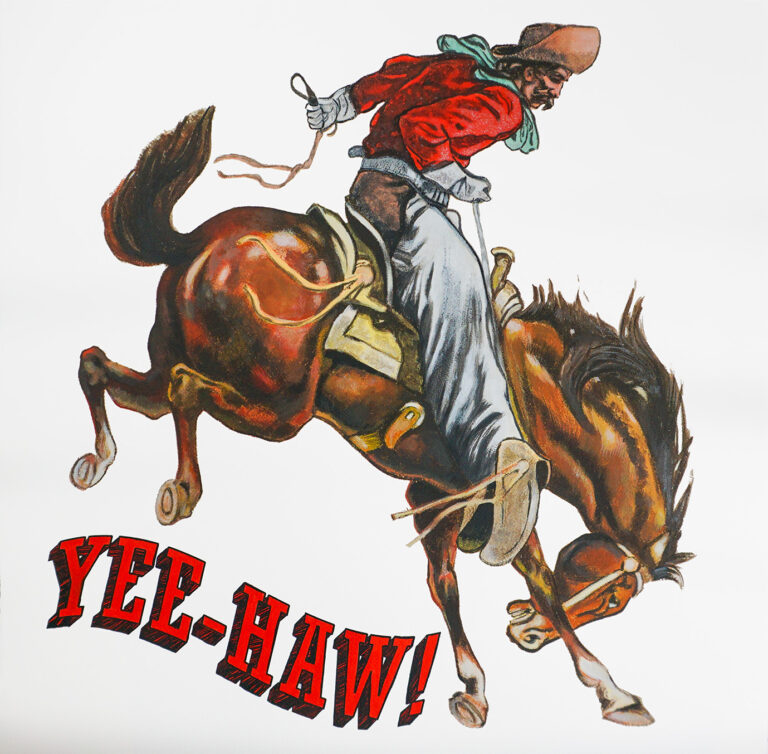
Grip Tight, Shout Loud
2025
ACRYLIC, WATERCOLOR, & GLITTER ON COTTON RAG PAPER
22″ x 22″
1/1
This piece is based on an original poster for Buffalo Bill’s Wild West Show, a legendary traveling spectacle that captivated audiences worldwide in the late 19th and early 20th centuries.
The phrase “Yee-haw,” prominently featured in this piece, has its roots in cowboy and rodeo culture. It remains an enduring expression of the spirit of the American West—full of energy, enthusiasm, and rugged individualism.
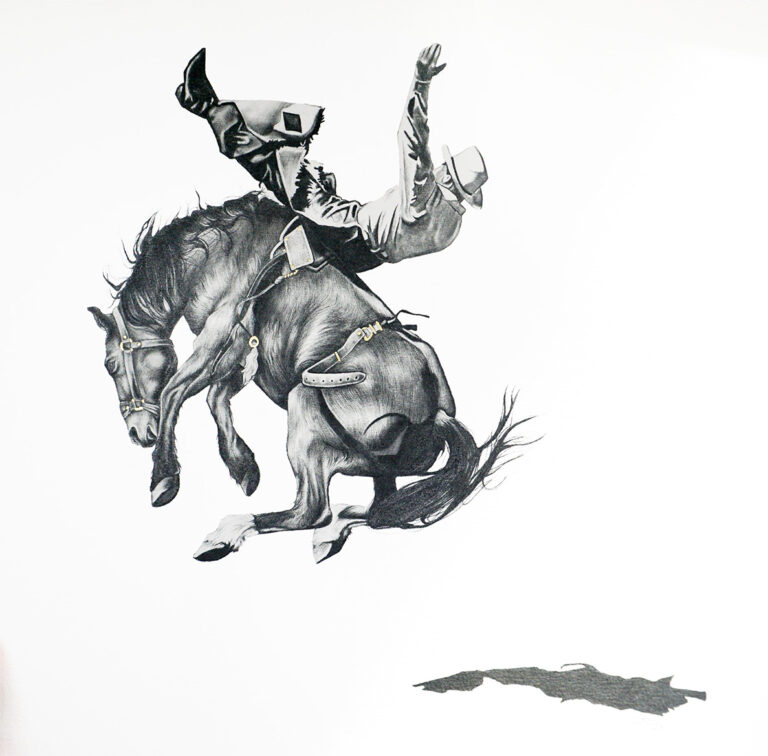
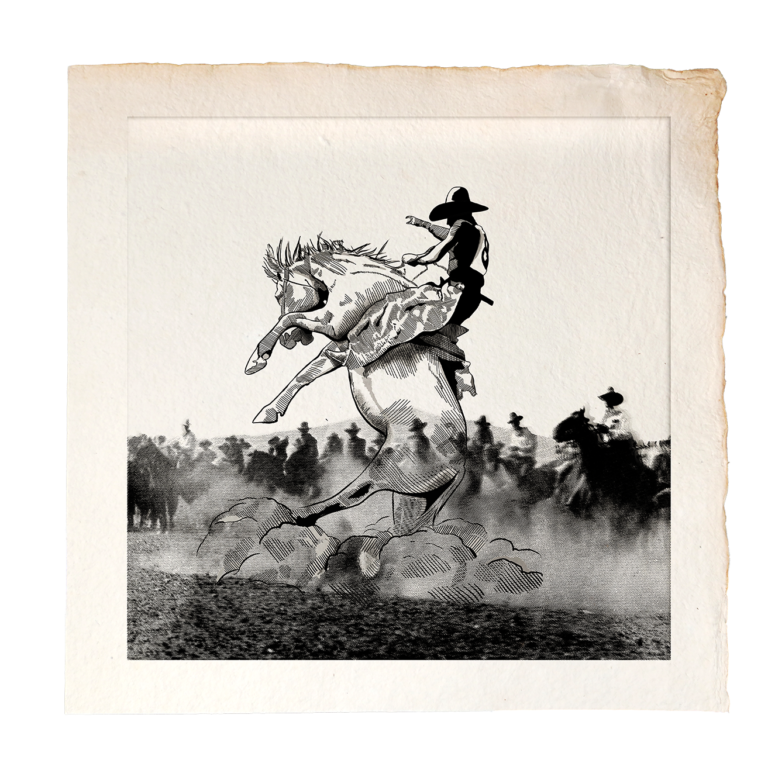
Storm in the Saddle
2025
GRAPHITE & 22K GOLD LEAF ON COTTON RAG PAPER
22″ x 22″
1/1
This piece is inspired by the iconic photograph Jim Mihalek on Hud, Tucson 1971 Rodeo Bronc Rider. The original image captures the electrifying moment of a rodeo bronc rider mid-ride, clinging to the bucking horse as it twists and rears with incredible power.
Rodeo bronc riding pushes both horse and rider to their limits, with the rider attempting to stay on for eight seconds while displaying control and style.
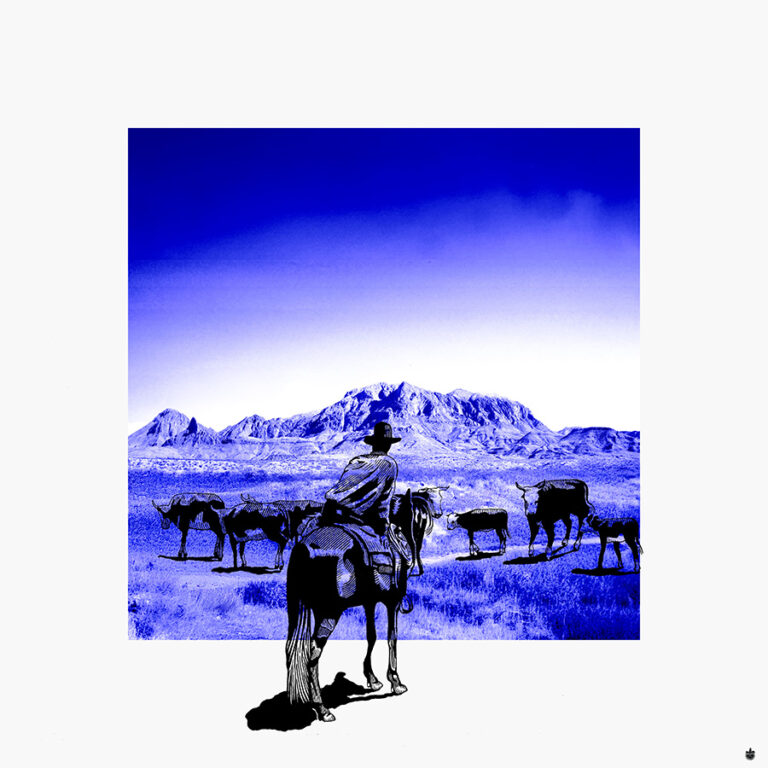
In the Shadow of Giants
2025
SCREENPRINTING ON COTTON RAG PAPER
30″ x 30″
1/1
The Chisos Mountains, located in what is now Big Bend National Park, provided a rugged and unpredictable landscape for cowboys working in the area. Rising to over 7,800 feet at Emory Peak, these mountains were among the most challenging terrains in Texas.
The isolation of these mountains meant that cowboys relied on their instincts, horses, and each other. Even in modern times, these peaks symbolize the unforgiving yet awe-inspiring landscapes that defined the frontier.
Beneath the Mountain’s Watch
2025
SCREENPRINTING ON COTTON RAG PAPER
30″ x 30″
1/1
At 7,825 feet, Emory Peak is the highest point in the Chisos Mountains, a rugged and isolated range within Big Bend National Park. For cowboys working in this area, the mountains served as a natural barrier and a challenge, forcing them to adapt to high-altitude riding and tracking cattle across steep and rocky terrain.
The ability to read the land, predict storms, and work with sure-footed horses was crucial for survival. Today, the Chisos Mountains remain a testament to the resilience and skill of the cowboys who rode beneath their towering peaks.
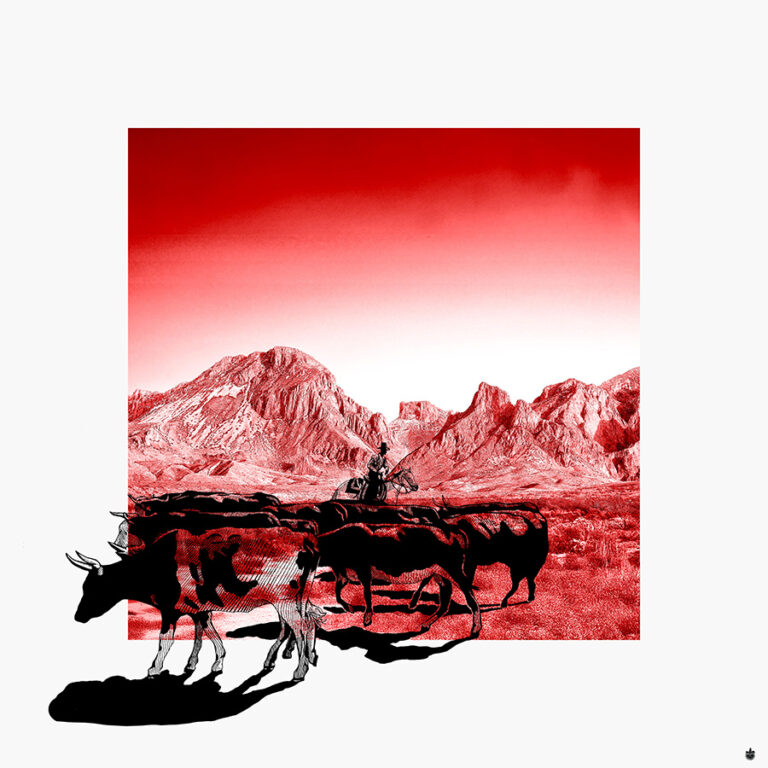
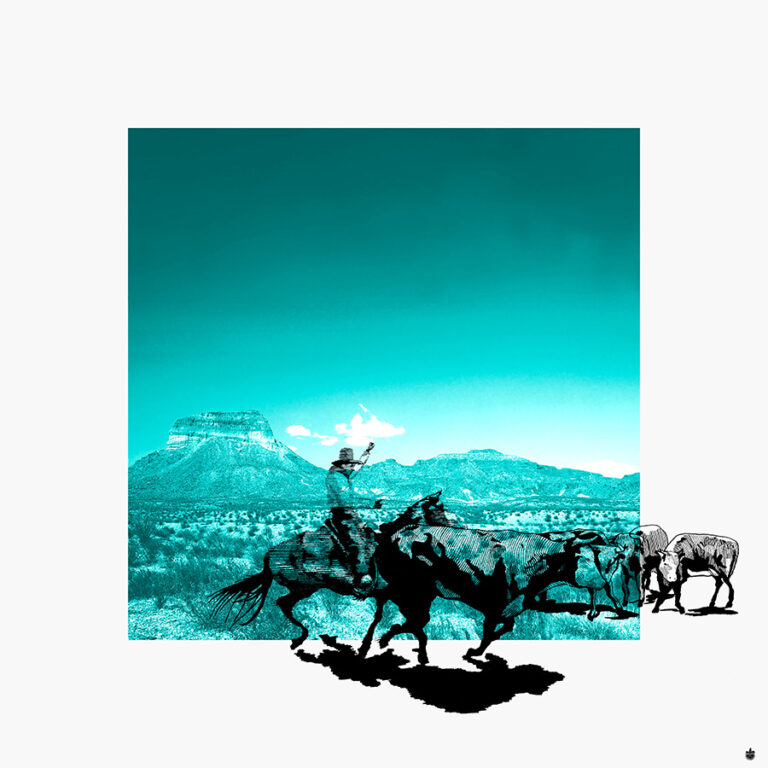
Divide and Conquer
2025
SCREENPRINTING ON COTTON RAG PAPER
30″ x 30″
1/1
Cerro Castellan, a striking peak in Big Bend National Park, has been a silent witness to the passing of cattle drives, ranchers, and frontier life for centuries. The peak, formed from volcanic activity millions of years ago, is a defining landmark of the Texas-Mexico borderlands, where cowboys worked in some of the most extreme conditions in the state.
This region was known for its remoteness and harsh environment, where water sources were scarce and the terrain was unforgiving. Despite the challenges, many ranches thrived due to their access to grazing lands stretching for miles under the shadow of the mountains.
Judged by His Own
2026
PHOTOGRAVURE ON COTTON
Image: 14″ x 14″
Edition of 11
The other riders are watching. A miss here costs more than pride — reputation is on the line, and out here a man is judged by his own.
Gilded Americana
Images once captured in silver are brought forward in silver and gold. Gilded Americana takes photographs of the American past and returns their material to them—recasting history as something unmistakably of the present.
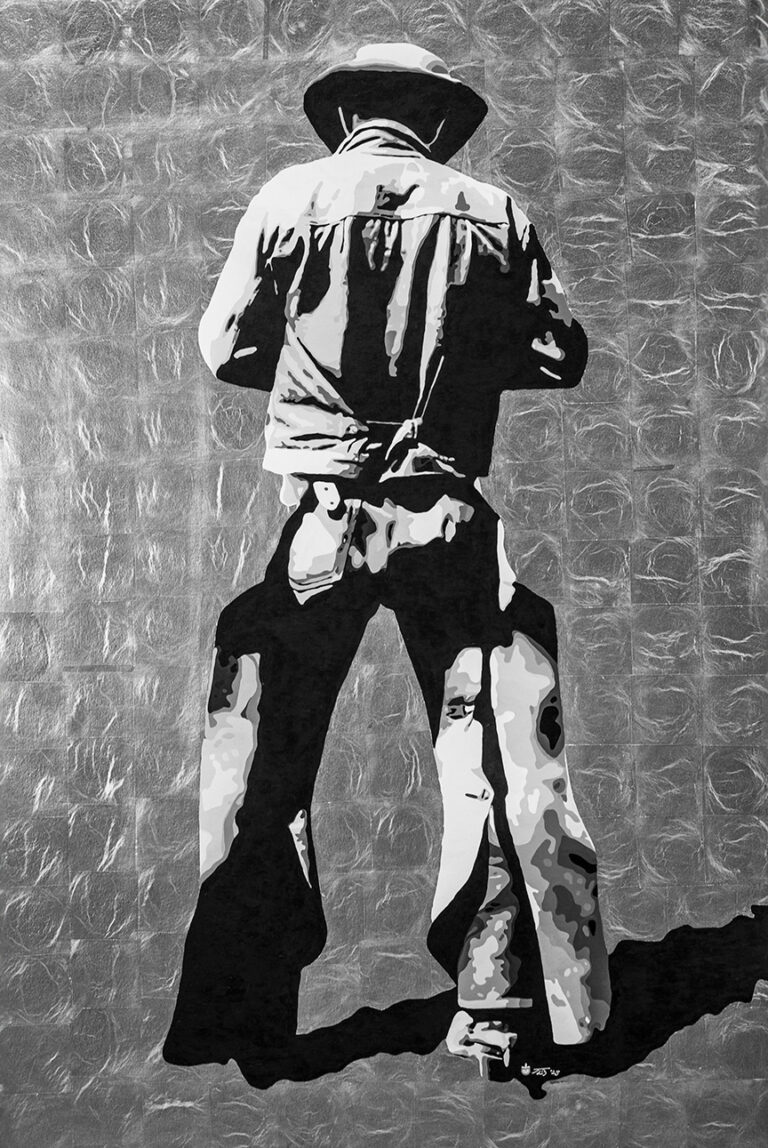
Last Light on the Range
2025
ACRYLIC PAINT & SILVER LEAF ON COTTON RAG PAPER
40″ x 60″
1/1
Cowboys like the one depicted often worked long days herding cattle, maintaining fences, and protecting livestock across vast, challenging terrains. Their attire, including chaps and spurs, was carefully designed for the job’s demands.
As the sun set on the open range, cowboys finished their daily work, gathering around campfires to share stories and prepare for the next sunrise.
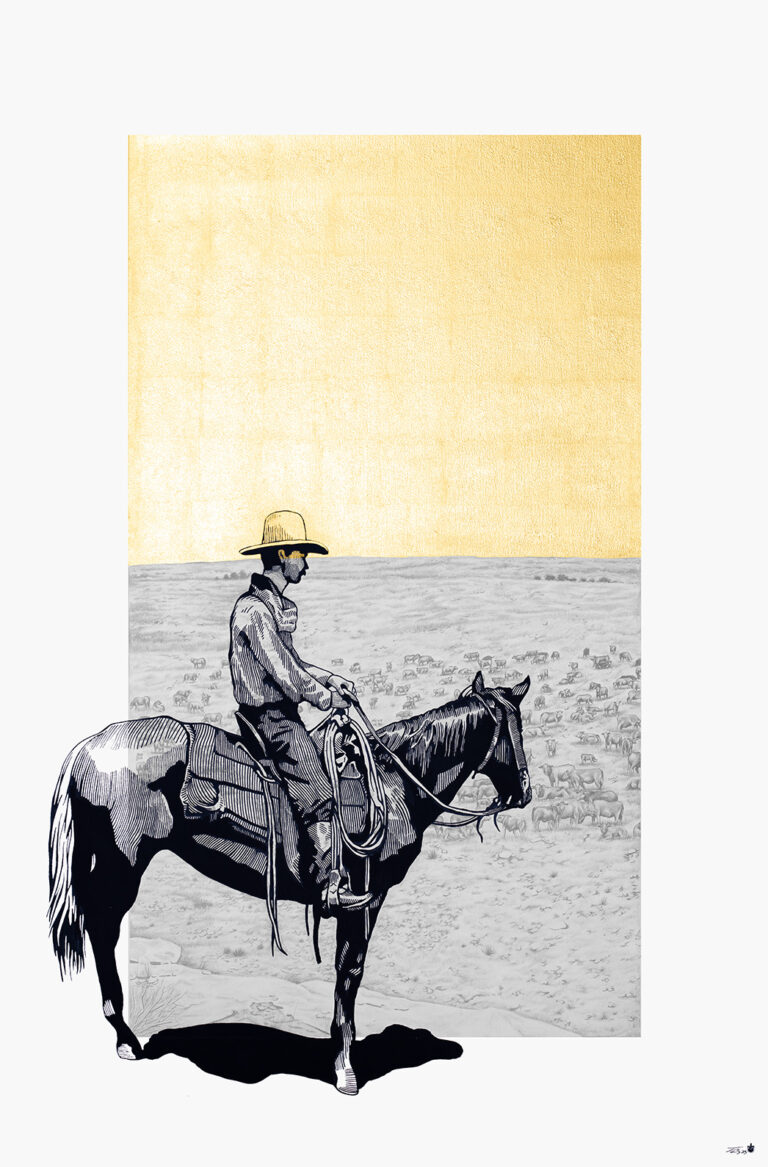
High Ground
2025
GRAPHITE, INK, & 22K GOLD LEAF ON COTTON RAG PAPER
36″ x 54″
1/1
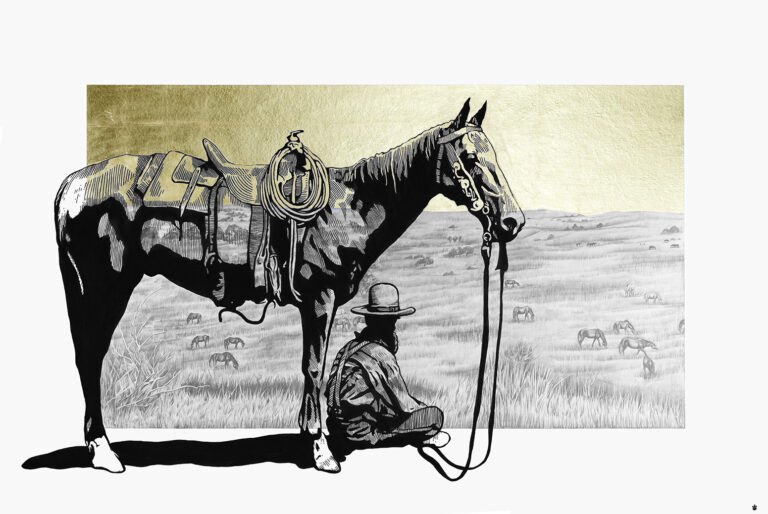
Based on Erwin E. Smith’s early 1900s photograph A Texas Cowboy, this image captures a lone cowboy on horseback, surveying a herd of cattle spread across the open range. The lone cowboy represents the enduring self-reliance and independence that defined the American West.
The Horse Wrangler
2025
GRAPHITE, INK, & 22K GOLD LEAF ON COTTON RAG PAPER
54″ x 36″
1/1
Based on Erwin E. Smith’s early 1900s photograph The Horse Wrangler, this image was taken on the LS Ranch in Texas. Cowboys here had to be masters of their craft, managing herds across vast stretches of open land and ensuring the health and movement of thousands of cattle.
The role of a horse wrangler was essential—these men were responsible for handling the remuda, the herd of horses cowboys used for work, ensuring that every rider had a fresh mount when needed.
Breaking the Wild
2025
GRAPHITE, INK, & 22K GOLD LEAF ON COTTON RAG PAPER
54″ x 36″
1/1
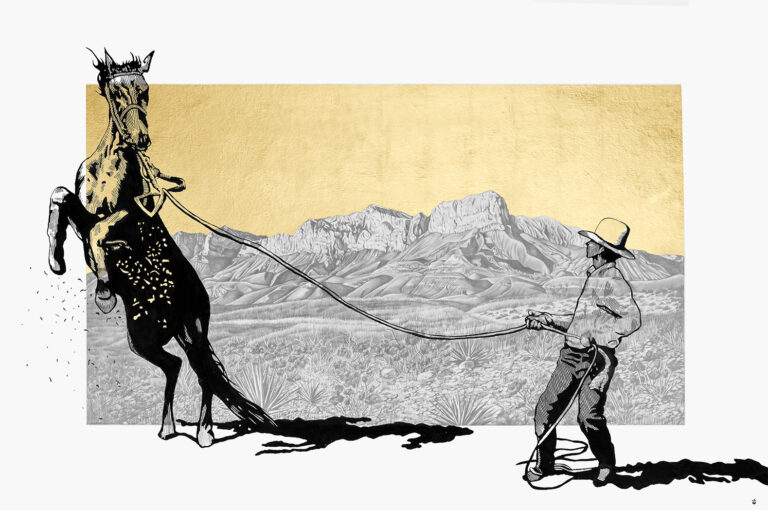
Based on Erwin E. Smith’s 1907 photograph The Bronc Gets Ugly, this piece depicts a cowboy attempting to break a wild bronc at the LS Ranch in Texas. The LS Ranch, one of the largest in Texas during the early 20th century, was known for producing top-tier working cowboys and tough, unbroken horses. Broncs at LS were meant to become reliable ranch horses, making the breaking process a long and grueling test of skill and patience. Cowboys had to train horses that would later carry them across miles of rugged terrain while managing cattle.
In the background is Guadalupe Peak, the tallest mountain in Texas at 8,751 feet. Part of the ancient Permian Reef, the peak is located in West Texas near the New Mexico border.
Where Giants Stand
2026
INKJET ON COTTON RAG · GOLD LEAF
Image: 18″ x 18″
Edition of 10
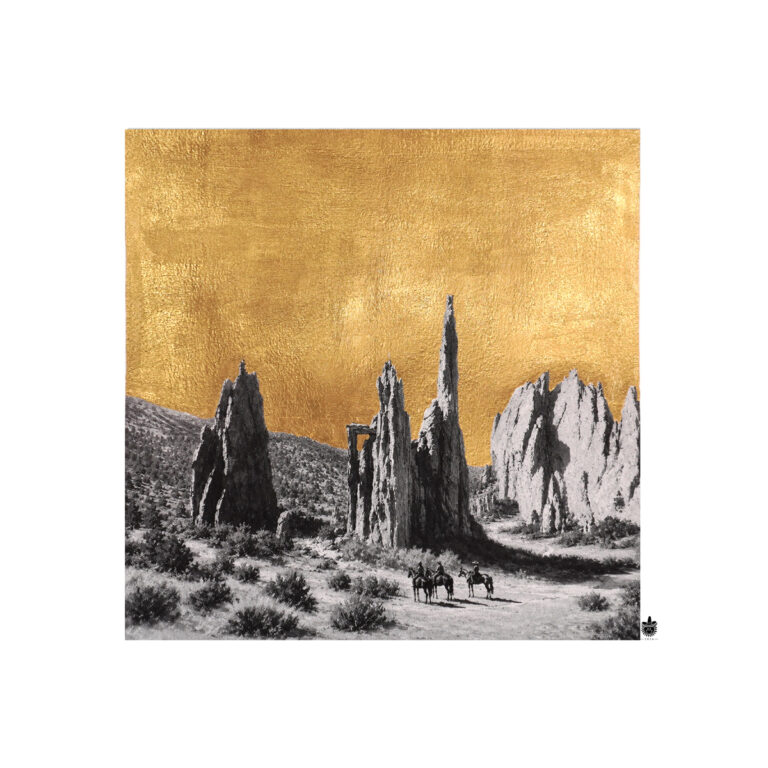
Rising from the Garden of the Gods near Colorado Springs, the Cathedral Spires became one of the American West’s most recognizable natural landmarks. Photographed by William Henry Jackson during the 1869 Hayden Survey. Finished in 22k gold leaf.
The Two Million Dollar Cowboy
2026
INKJET ON COTTON RAG · SILVER LEAF
Image: 18″ x 24″ · Framed: 23″ x 29″
Edition of 10
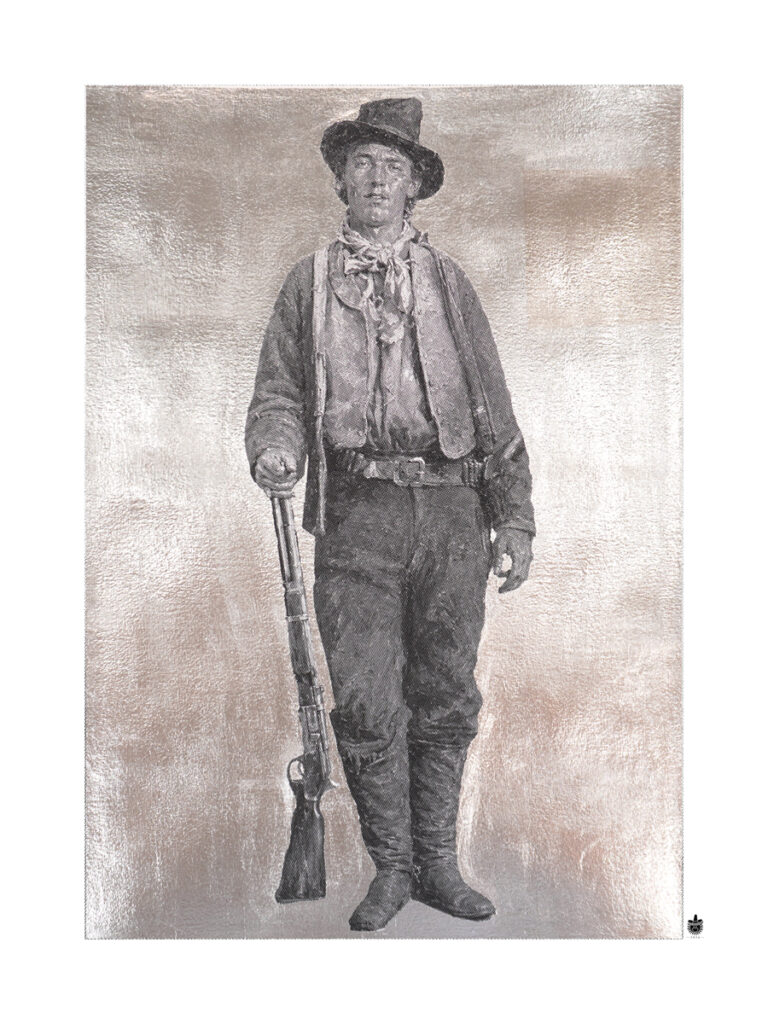
Built from the only authenticated photograph of Billy the Kid, taken in Fort Sumner shortly before his death — the tintype that sold for $2.3 million in 2011. Finished in silver leaf.
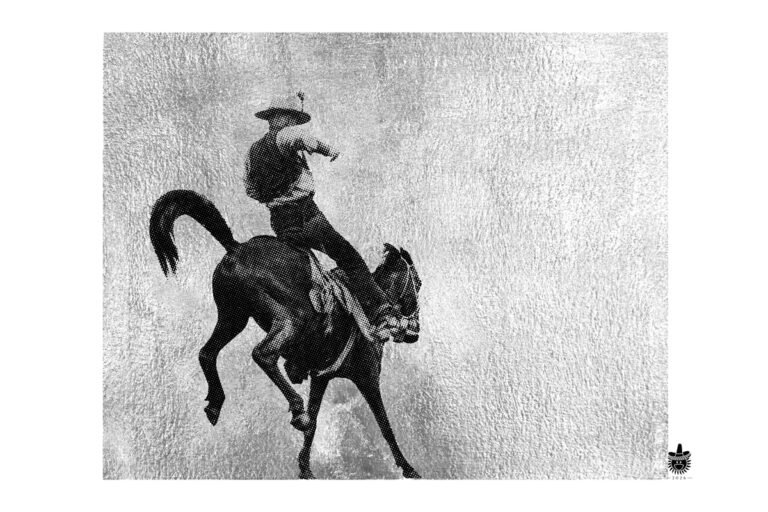
The Last Kick I · “No Easy Ride”
2026
INKJET ON COTTON RAG · SILVER LEAF
Image: 12″ x 8″ · Framed: 18″ x 18″
Edition of 12
“Courage is being scared to death — and saddling up anyway.”
The opening seconds of a bronc ride, where control is uncertain and instinct takes over — a study of movement and perseverance.
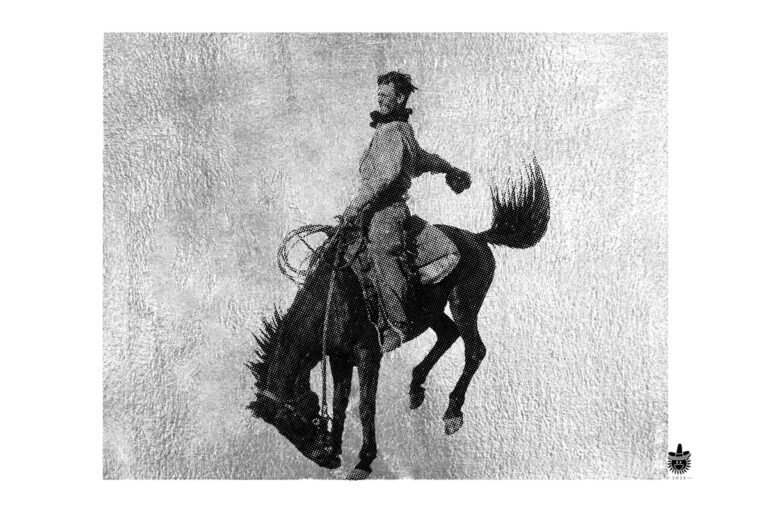
The Last Kick II · “Holding On”
2026
INKJET ON COTTON RAG · SILVER LEAF
Image: 12″ x 8″ · Framed: 18″ x 18″
Edition of 12
“It’s not whether you get knocked down; it’s whether you get up.”
Suspended between control and chaos, the rider commits completely to the next second — a tribute to the resilience that defines rodeo.
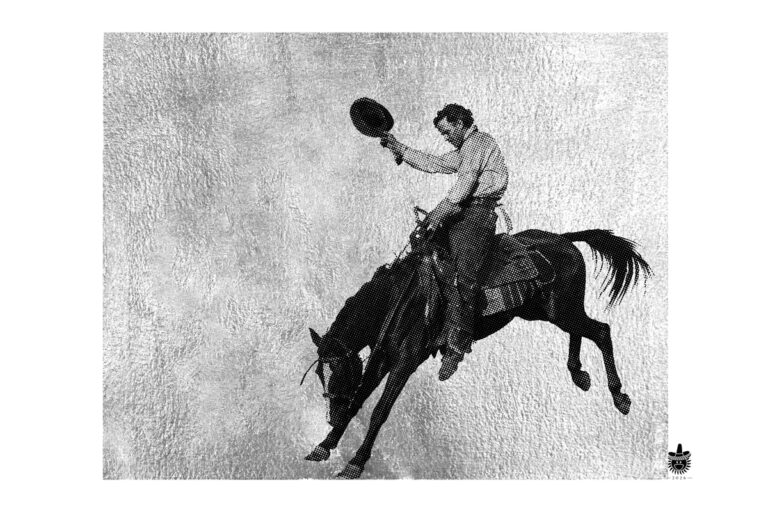
The Last Kick III · “Hat in Hand”
2026
INKJET ON COTTON RAG · SILVER LEAF
Image: 12″ x 8″ · Framed: 18″ x 18″
Edition of 12
“Always drink upstream from the herd.”
The ride ends with a hat raised in respect — a nod to rodeo’s enduring code of humility and sportsmanship.
Cult Portraits
History, with a few liberties taken.
Cult Portraits takes familiar figures of Western Americana and nudges them out of their own time. A new pair of boots, a mask, a raccoon cap, a flash of color, or an unexpected backdrop shifts the portrait without losing the person underneath. The history stays recognizable; the mythology gets a contemporary rewrite.
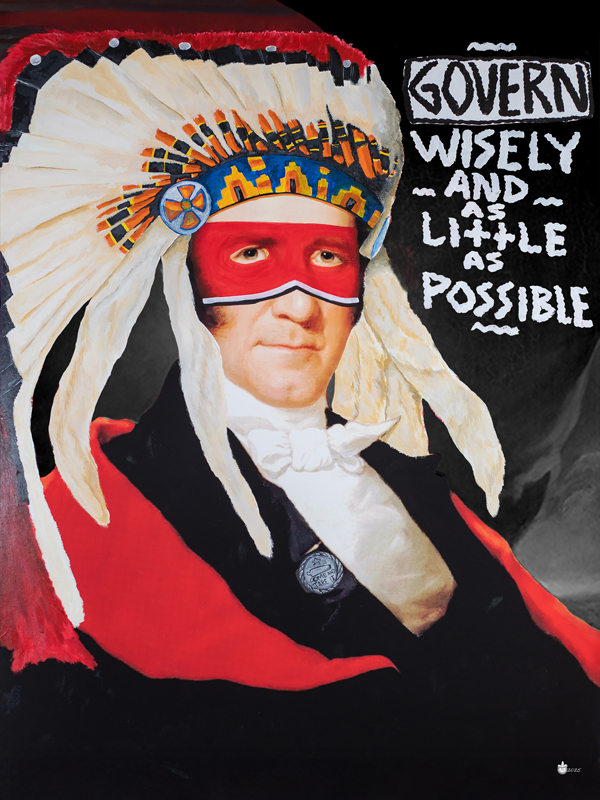
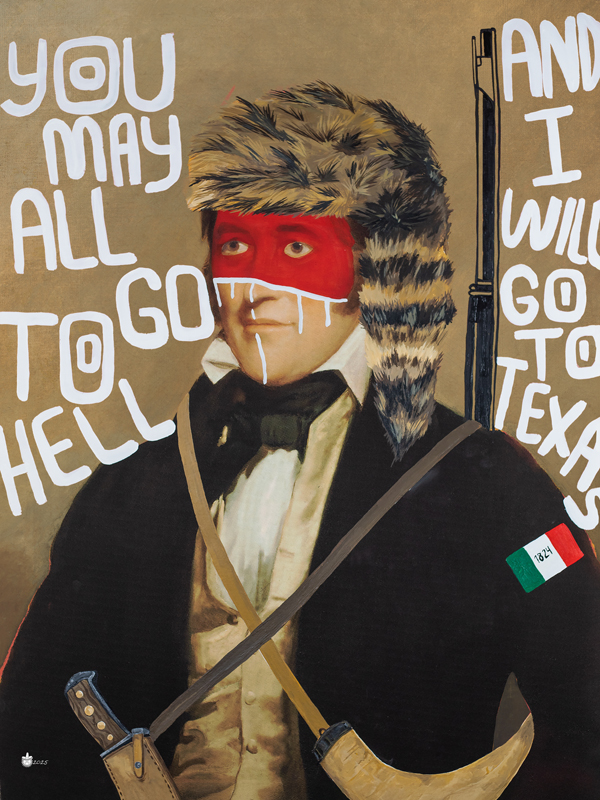
Sam Houston – Colonneh
2022
COTTON RAG PAPER with Acylic Paint
25″x30″
1/1
Original Portrait: Sam Houston by Martin Johnson Heade, 1846
This portrait was painted while Sam Houston served as a U.S. Senator from Texas, shortly after the Republic of Texas was annexed into the United States. Houston remains the only American to have served as governor of Tennessee and Texas. His close ties to the Cherokee, who adopted him as a young man, earned him the name “Colonneh” (The Raven), which he carried with him throughout his life. The painting reflects his statesmanlike presence, yet Houston was known for his unpredictable political career, at times embracing Texas independence, advocating for U.S. statehood, and later opposing secession, ultimately costing him his position as Texas governor.
David Crockett – King of the Wild Frontier
2022
COTTON RAG PAPER with Acylic Paint
25″x30″
1/1
Original Portrait: Davy Crockett by Chester Harding, 1834
Davy Crockett sat for this portrait during his anti-Jacksonian speaking tour, where he promoted the Whig Party while visiting cities in the Northeast. The picture was painted in Boston, where contemporary descriptions praised his amiable expression and striking features, detailing his parted hair combed back into a slight curl at the neck. Crockett served in Congress then but had already become a folk hero known for his frontier exploits. Less than two years later, in 1836, he would die at the Battle of the Alamo, securing his place in Texas legend.
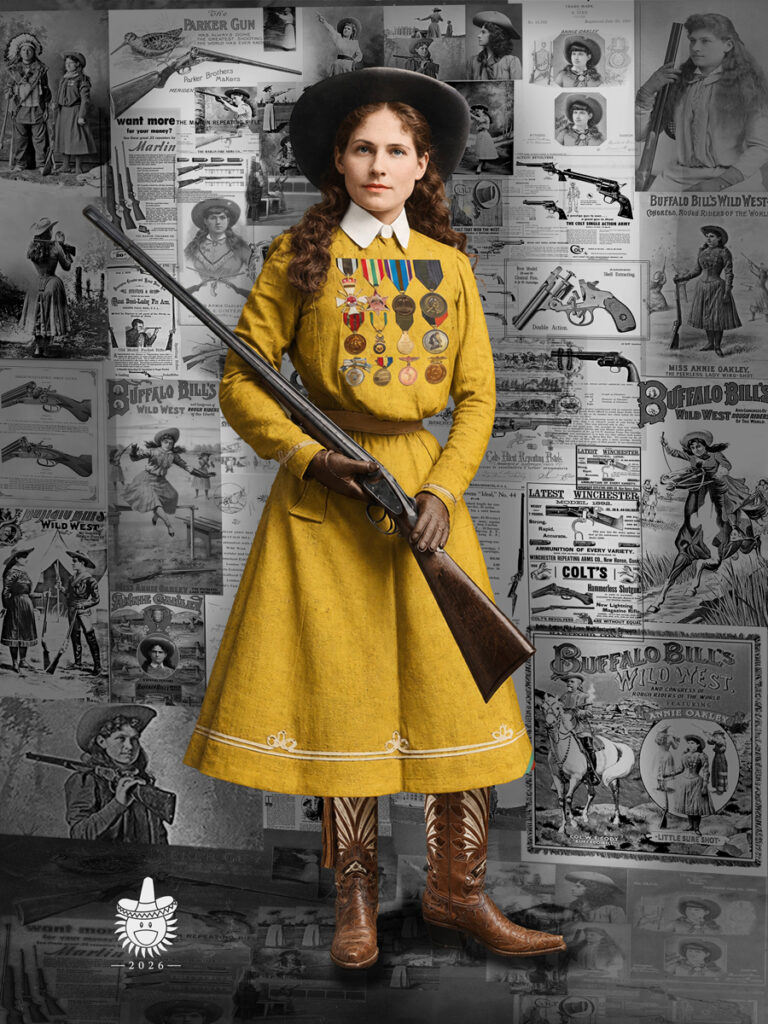
Annie Oakley (Queen of the Trigger)
2026
MULTI-LAYERED LENTICULAR
30″ x 40″ · 1 of 1
9″ x 12″ · Edition of 12
“Aim true. Live boldly.”
At the height of her fame as the world’s greatest sharpshooter and the star of Buffalo Bill’s Wild West, Annie Oakley became an international symbol of skill and confidence. After Richard K. Fox’s 1899 portrait, preserved by the Library of Congress.
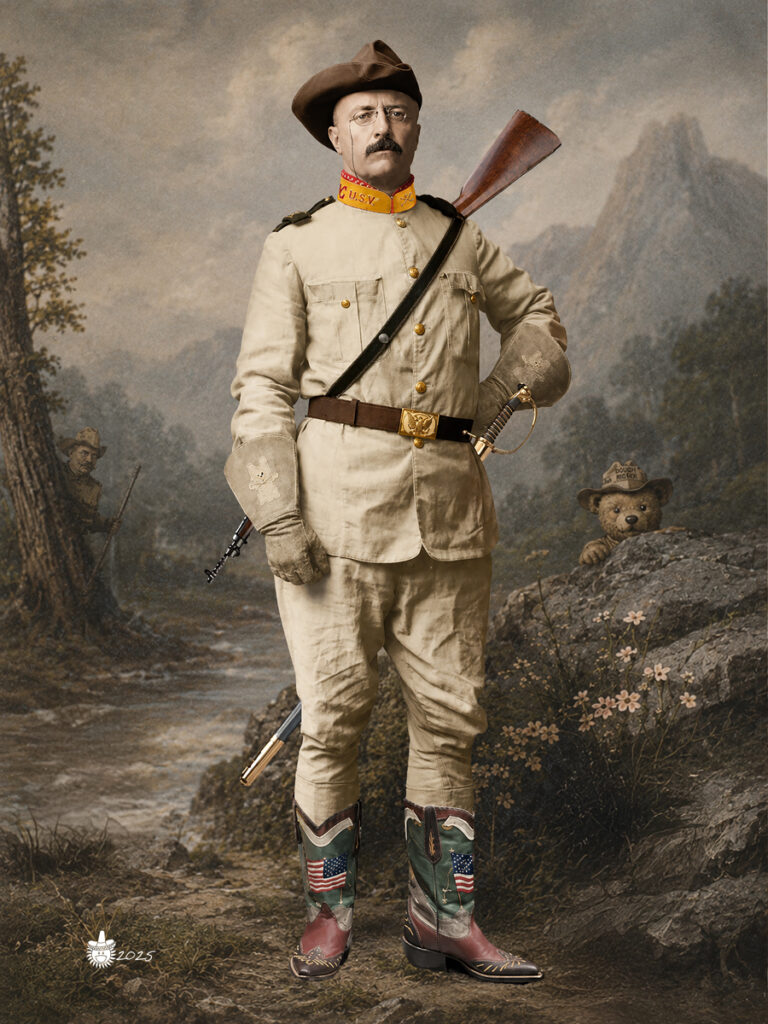
Teddy Roosevelt (The Original Teddy Bear)
2026
MULTI-LAYERED LENTICULAR
30″ x 40″ · 1 of 1
18″ x 24″ · Edition of 10
“Speak softly and carry a big stick.”
From B.J. Falk’s 1898 studio portrait of Roosevelt in his Rough Rider uniform — taken just after Cuba, weeks before he won the New York governorship.
Founding Fathers of the West
America at 250, with a new uniform.
The Founding Fathers weren’t cowboys—but they carried many of the same ideals the West would later mythologize: independence, resolve, honor, and responsibility. These aren’t portraits of who they were, but who they wanted to be remembered as. The character stays. We just updated the uniform.
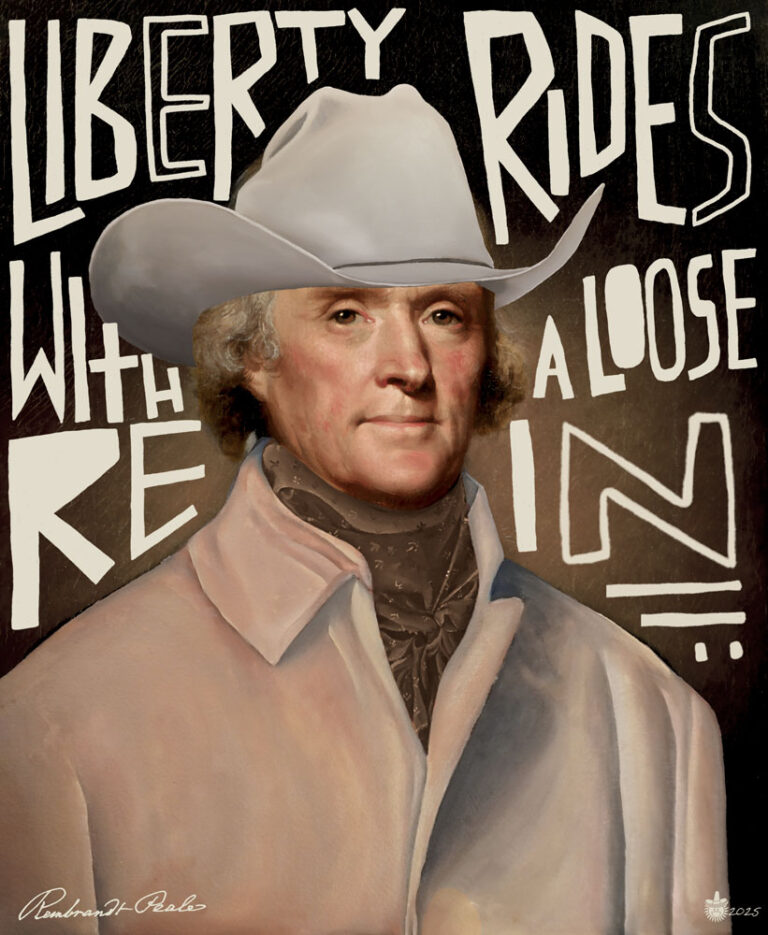
Thomas Jefferson (The Sage of the Saddle)
2026
Multi-layered lenticular
30″ x 40″ · 1 of 1
20″ x 25″ · Edition of 10
Cowboy Code No. 1
Talk Less, Say More
Words carry weight out here. The cowboy doesn’t waste them. He listens first, speaks with purpose, and lets his actions do the rest.
Original artist: Rembrandt Peale
Date painted: c. 1800
Age of subject: 57
Context: Serving as Vice President of the United States under John Adams, just before his election to the presidency in 1801
Current location: White House Collection, Washington, D.C.
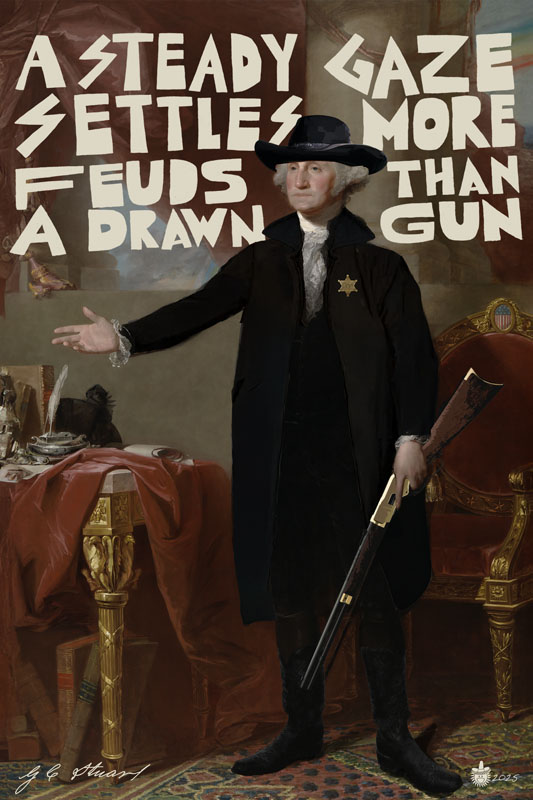
George Washington (The Stoic Trail Boss)
2026
Multi-layered lenticular
24″ x 36″ · Edition of 5
8″ x 12″ · Edition of 12
Cowboy Code No. 2
When You Make a Promise, Keep It
A man’s word is his bond. The cowboy doesn’t deal in empty talk. What he says, he stands by no matter the cost.
Original artist: Gilbert Stuart
Date painted: 1796
Age of subject: 64
Context: Second term as President of the United States, near the end of his presidency.
This portrait was intended as a formal statement of leadership, stability, and the authority of the new republic.
Current location: National Portrait Gallery, Washington, D.C.
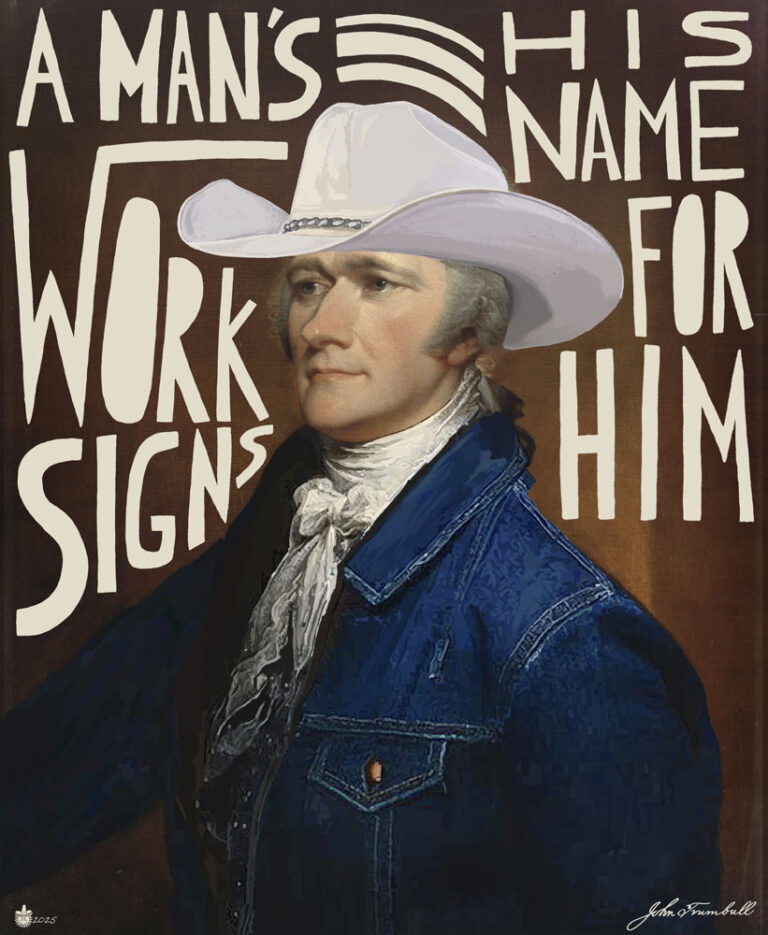
Alexander Hamilton (The Duelist in the Dust)
2026
Multi-layered lenticular
30″ x 35″ · 1 of 1
20″ x 25″ · Edition of 10
Cowboy Code No. 3
Take Pride in Your Work
The cowboy stands behind what he builds. Every mark, every move, every decision carries his name. Out here, pride isn’t vanity, it’s accountability. The work speaks long after the man is gone.
Original artist: John Trumbull
Date painted: c. 1806
Age of subject: 49 (posthumous portrait; Hamilton died in 1804 at 47)
Context: This image reflects Hamilton at the height of his legacy. After serving as the first U.S. Secretary of the Treasury, establishing the nation’s financial system, and becoming one of the most influential Founding Fathers.
Current location: National Portrait Gallery, Washington, D.C.
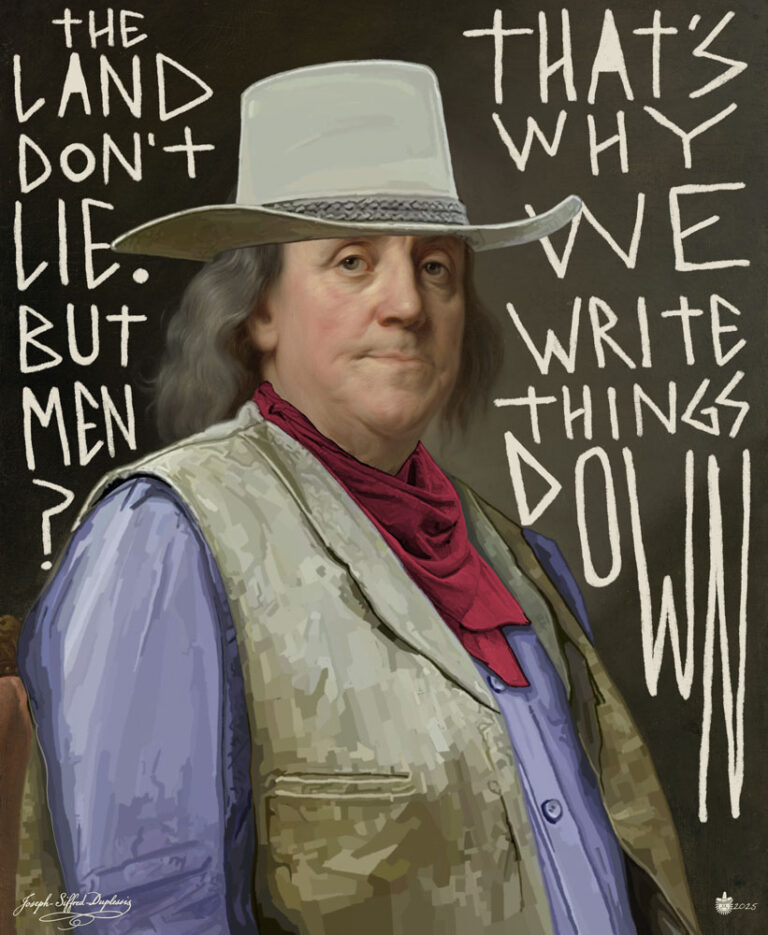
Benjamin Franklin (Postmaster of the Prairie)
2026
Multi-layered lenticular
30″ x 35″ · 1 of 1
20″ x 25″ · Edition of 10
Cowboy Code No. 4
Remember, Some Things Aren’t for Sale
The cowboy knows the difference between value and cost.
Some things you hold onto your word, your land, your name, because once they’re gone, no deal can bring them back.
Original artist: Joseph-Siffred Duplessis
Date painted: c. 1778
Age of subject: 72
Context: Franklin was in Paris as the American ambassador to France during the Revolutionary War. At this time, he was one of the most famous Americans in the world, securing French support for the colonies. This portrait captures him at the height of his diplomatic influence.
Current location: National Portrait Gallery, Washington, D.C.
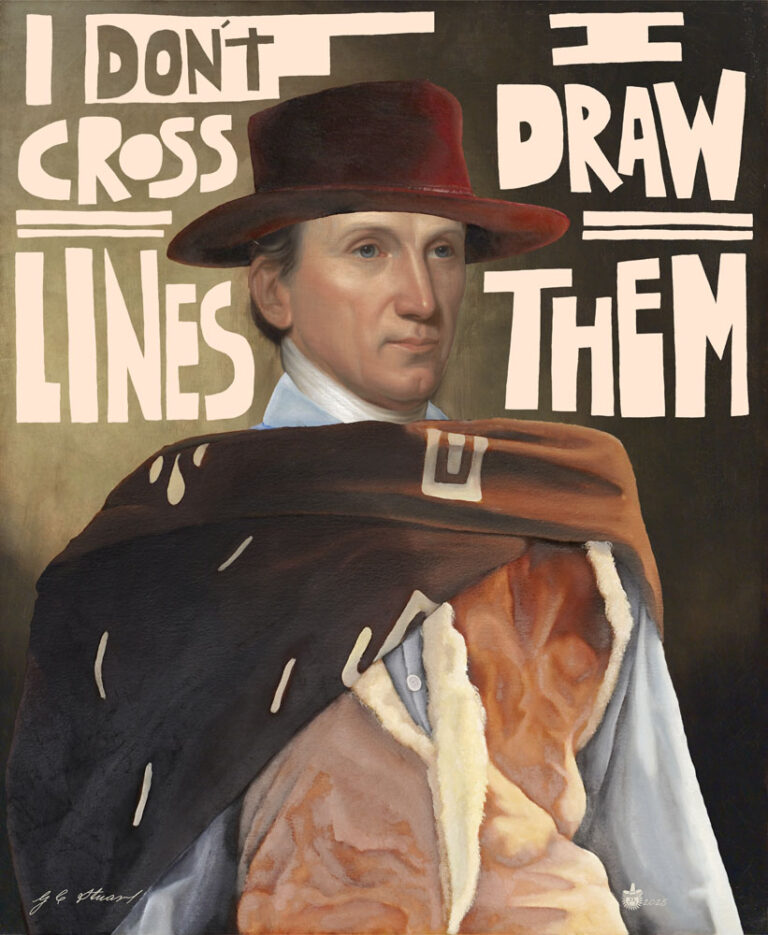
James Monroe (The Lone Rider)
2026
Multi-layered lenticular
30″ x 35″ · 1 of 1
Cowboy Code No. 5
Know Where to Draw the Line
Out here, boundaries matter. The cowboy understandswhere to stand, what to defend, and when to hold firm. Not every line is visible, but the important ones are never crossed.
Original artist: Gilbert Stuart
Date painted: c. 1820
Age of subject: 62
Context: Final years of his presidency – Monroe was completing his second term, shaping U.S. foreign policy (Monroe Doctrine, 1823) and overseeing a period of relative national unity.
Current location: National Portrait Gallery, Washington, D.C.
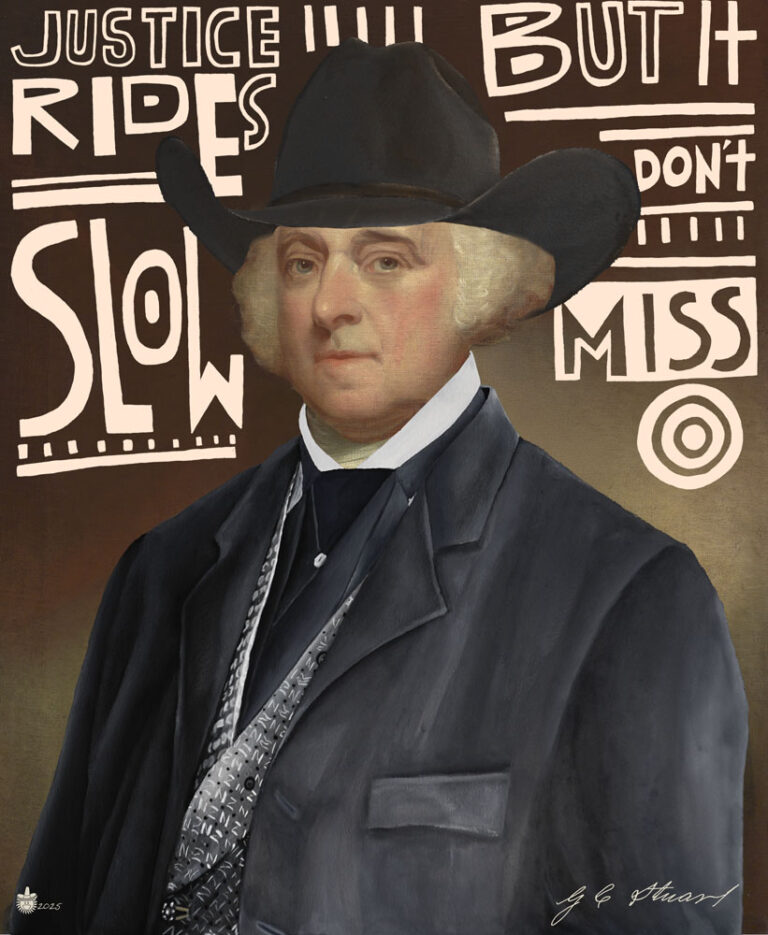
John Adams (The Unflinching Lawman)
2026
Multi-layered lenticular
30″ x 35″ · 1 of 1
20″ x 25″ · Edition of 10
Cowboy Code No. 6
Do What Has to Be Done
The cowboy doesn’t wait for easy. He faces what’s in front of him and sees it through. No shortcuts, no excuses. Just the work, done right.
Original artist: Gilbert Stuart
Date painted: c. 1800-1815
Age of subject: late 60’s
Context: Painted after his presidency, reflecting Adams in his later years post Founding era, with his legacy as a principal advocate for independence and the rule of law already established.
Current location: National Portrait Gallery, Washington, D.C.
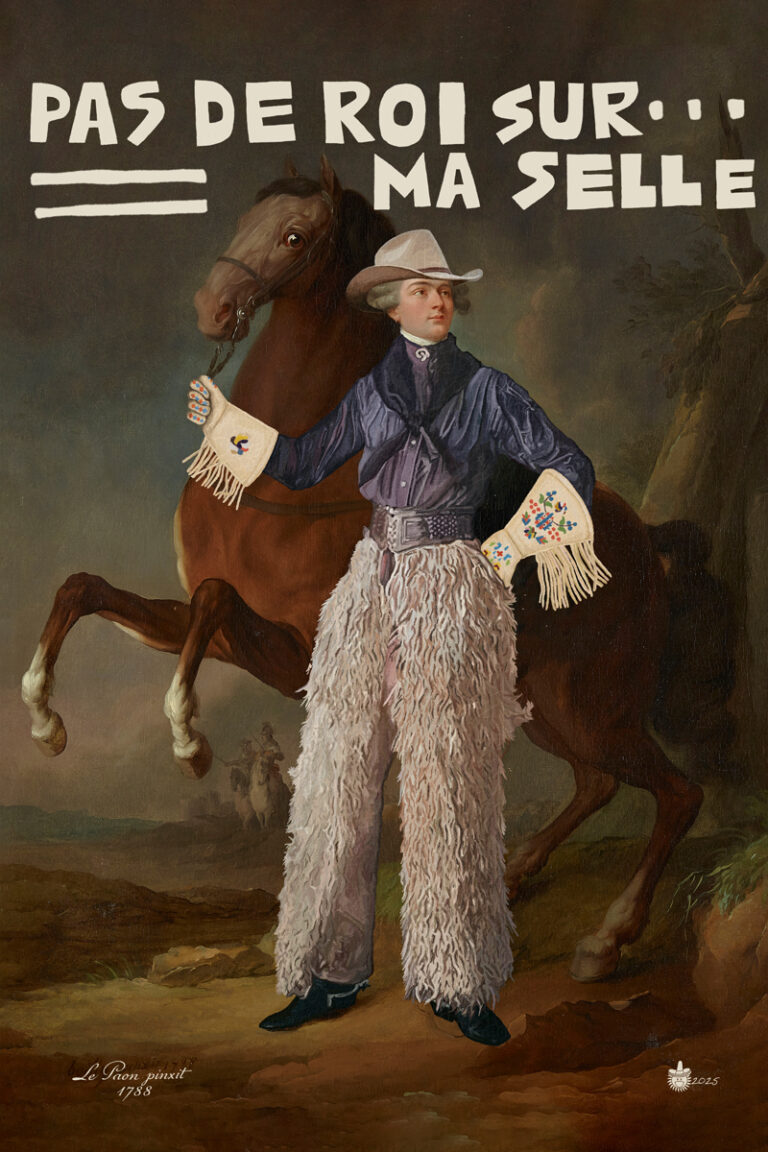
Marquis de Lafayette (The Cowboy Who Spoke in Cursive)
2026
Multi-layered lenticular
24″ x 36″ · Edition of 5
8″ x 12″ · Edition of 12
Cowboy Code No. 7 — Ride for the Brand
A man’s loyalty is measured by what he stands behind. The cowboy doesn’t drift. He commits, shows up, and carries the weight of what he represents.
Original artist: Jean-Baptiste Le Paon
Date painted: c. 1780
Age of subject: 23
Context: Depicted as a young French aristocrat and military officer at the beginning of his involvement in the American Revolutionary War. This is the period when Lafayette volunteered to support the American cause, becoming a symbol of foreign alliance and youthful idealism.
Current location: Musée de l’Armée, Paris, France
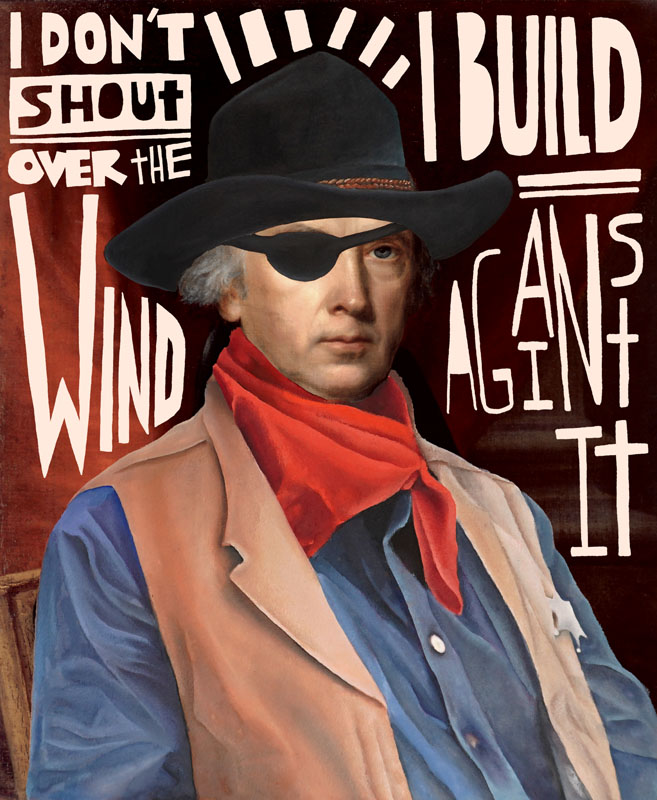
James Madison (The Quiet Architect)
2026
Multi-layered lenticular
30″ x 35″ · 1 of 1
Cowboy Code No. 8 — Be Tough, But Fair
Strength isn’t about force, it’s about balance. The cowboy stands his ground when he has to, but never loses sight of what’s right.
Fairness earns respect. And out here, respect is everything.
Original artist: Gilbert Stuart
Date painted: c. 1804
Age of subject: 53
Context: Painted during his years as Secretary of State under Thomas Jefferson, just before becoming the fourth President of the United States. This is Madison at the height of his political influence, shaping the young nation’s structure and foreign policy.
Current location: The White House, Washington, D.C.
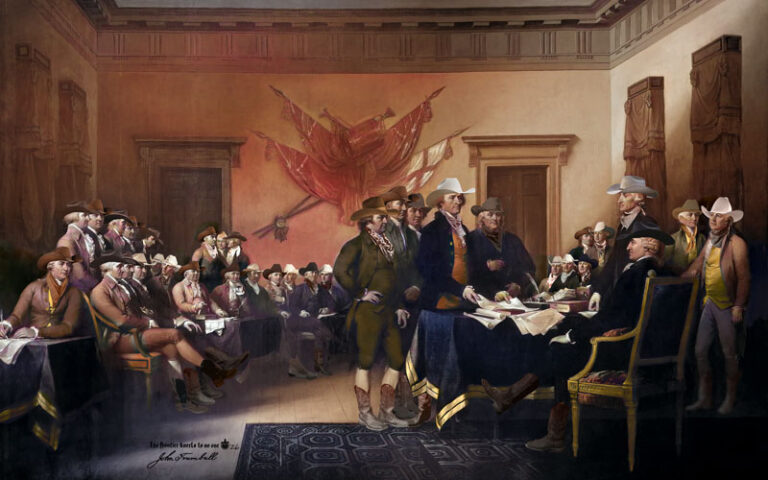
The Riders Who Signed
2026
Image: 30″ x 48″ · Framed: 52″ x 36″ · Edition of 3
Cowboy Code No. 9 — Always Finish What You Start
A cowboy doesn’t leave things half done. When the trail gets rough, he keeps riding. What’s begun deserves to be seen through to the end.
Original artist: John Trumbull
Date painted: 1818
Title: Declaration of Independence
Context: This painting depicts the presentation of the draft of the Declaration of Independence to the Continental Congress on June 28, 1776. It is not the signing itself, but the moment when the Committee of Five — Thomas Jefferson, John Adams, Benjamin Franklin, Roger Sherman, and Robert Livingston — presented the document.
Current location: United States Capitol Rotunda, Washington, D.C.
The Vincent Drives
Van Gogh Goes West
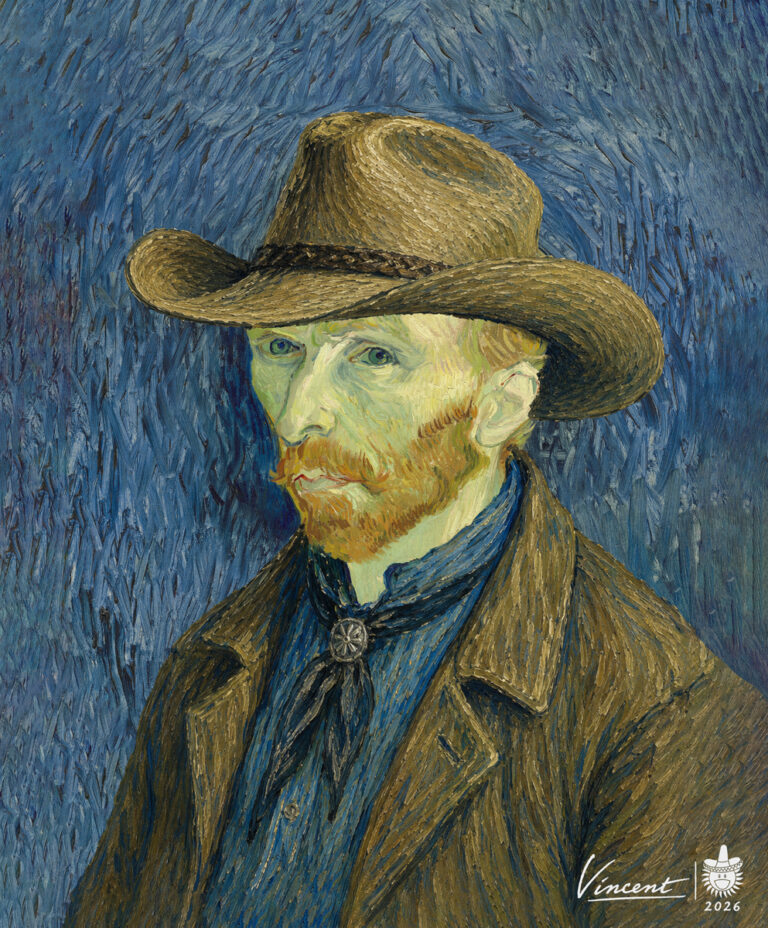
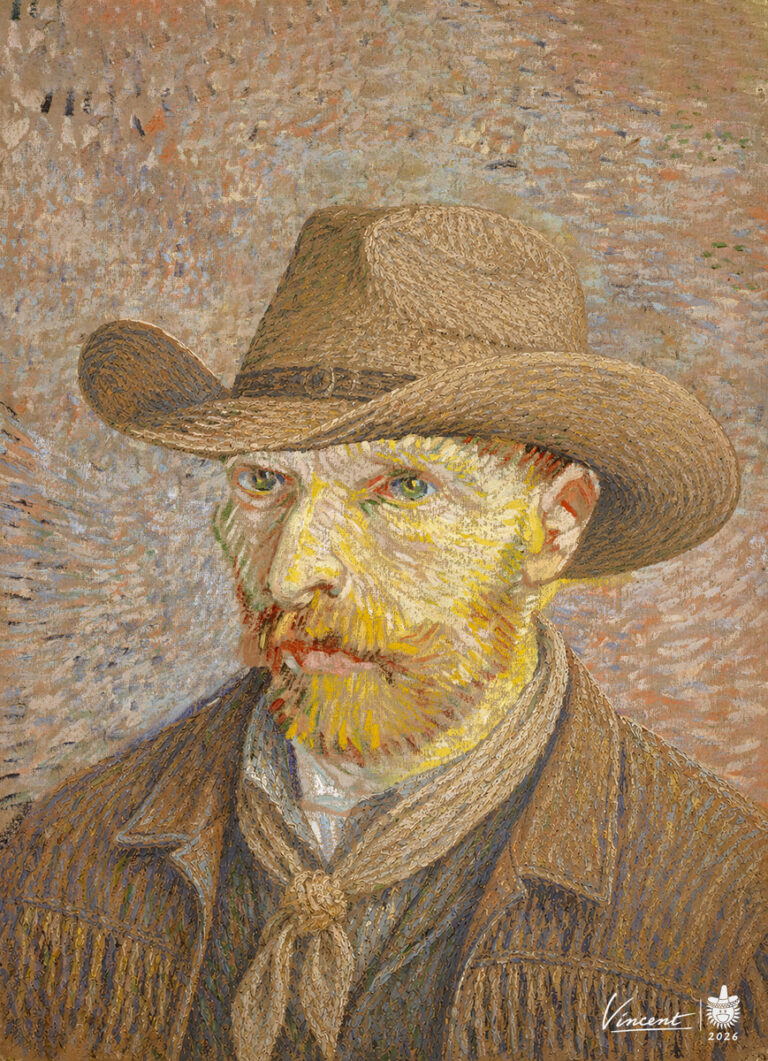
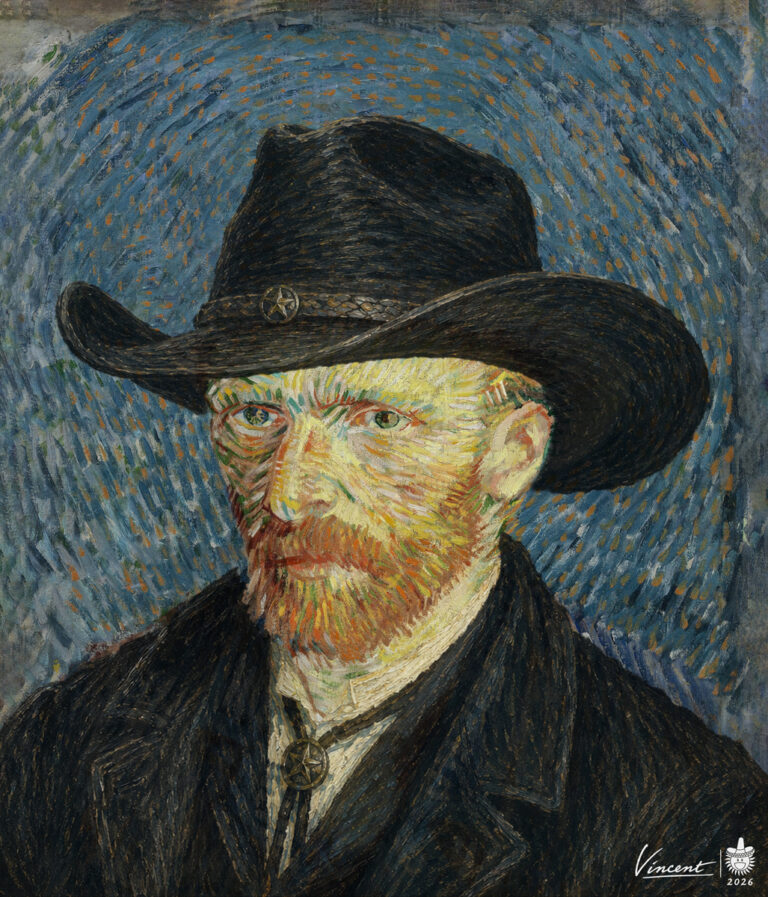
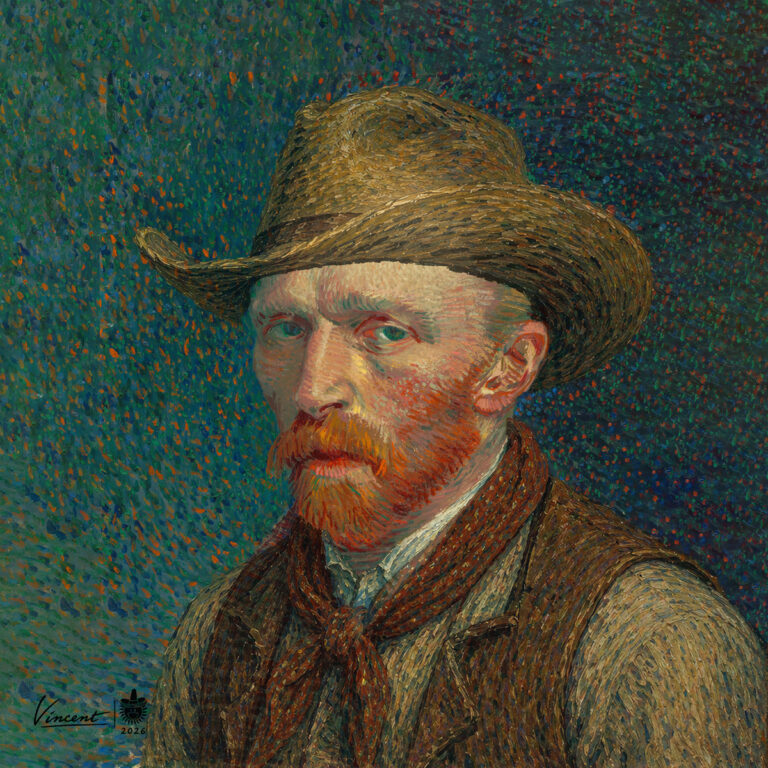
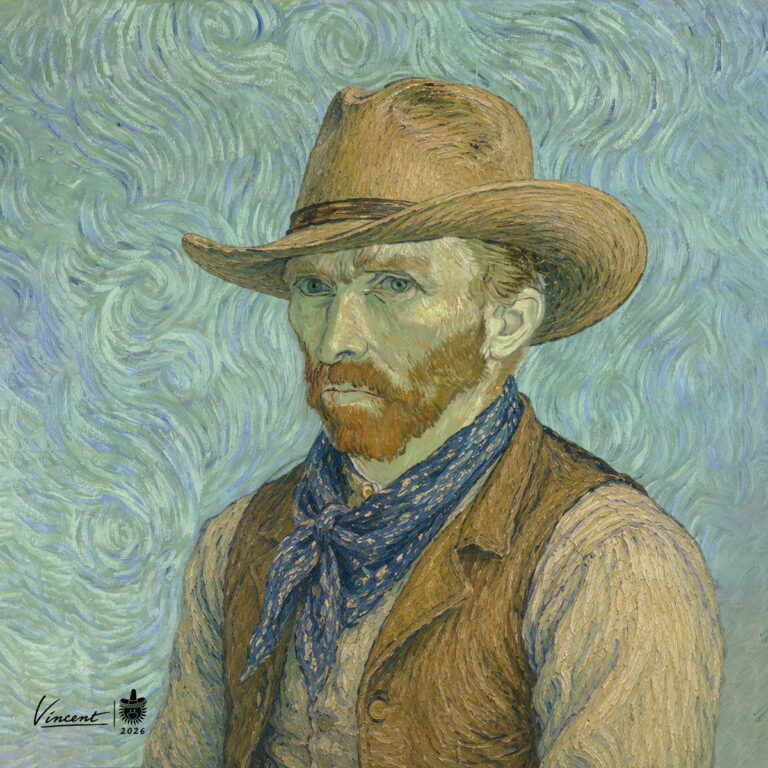
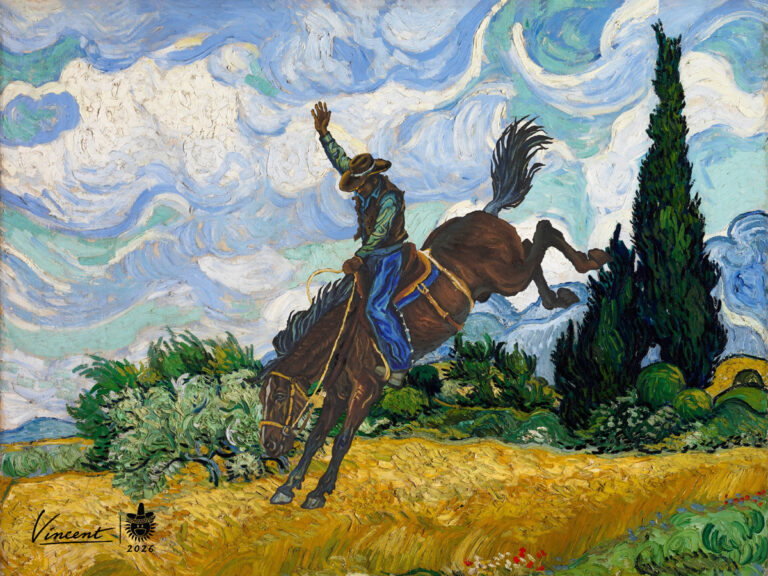
Two worlds that never met—until now. The Vincent Drives brings Vincent van Gogh into the final years of the great cattle-drive era, recasting his unmistakable face, color, and brushwork against the mythology of the American West. The history stays put. Vincent simply rides into it.
The Dutch Cowboy
2026
Multi-layered lenticular
40″ x 46″ · 1 of 1
The grey felt hat becomes a cowboy hat, but the stare stays unmistakably Vincent — Paris intensity put to work on the range. He always had the temperament; he just needed the hat. After Van Gogh’s Self-Portrait with Grey Felt Hat. Original work.
The Frontier Impressionist
2026
Multi-layered lenticular
48″ x 34″ · 1 of 1
Vincent trades the boulevards of Paris for an endless prairie — a new studio without walls. After Van Gogh’s Self-Portrait with Straw Hat. Original work.
One Ear in Dodge
2026
Multi-layered lenticular
18″ x 21″ · 1 of 1
Vincent rides into the mythology of Dodge City — a mysterious past, an unmistakable face, and one hell of a story. After Van Gogh’s 1889 Self-Portrait.
The Red-Bearded Wrangler
2026
Multi-layered lenticular
36″ x 36″ · 1 of 1
8″ x 8″ · Edition of 12
The famous red beard belongs equally to the painter and the trail boss he might have become — sun-worn and stubborn. After Van Gogh’s 1887 Self-Portrait.
Vincent Goes West
2026
Multi-layered lenticular
36″ x 36″ · 1 of 1
8″ x 8″ · Edition of 12
Vincent finally gets the horizon his restless brush was always searching for — the studio gives way to the open range. After Van Gogh’s Self-Portrait, 1889.
When Vincent Rode West
2026
Multi-layered lenticular
24″ x 18″ · Edition of 10
The restless energy of Van Gogh’s landscapes climbs into the saddle — brushstroke becomes dust, cypress becomes open range. After Wheat Field with Cypresses.
Pop Art
This series reimagines iconic imagery, consumer culture, and bold symbols, merging historical references with a modern pop art lens. From classic branding to cultural traditions, these works offer a vibrant, contemporary take on familiar subjects.
Colores con Sabor
2026
Inkjet on Cotton Paper
single – 18” x 24” in
set – 8′ x 8′ ft
1/6
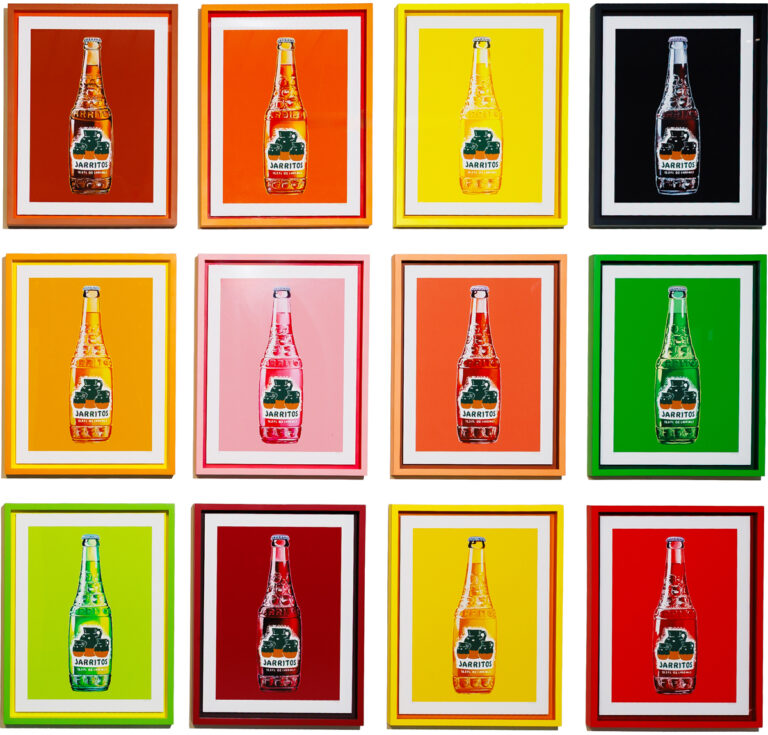
Jarritos is more than a soda—it is color as memory. Before printed labels became
standard, each flavor was recognized purely by hue. The bottle itself was a form of
communication: a shared visual language that linked family kitchens, neighborhood
shops, and border-town taquerías.
This series of twelve large-scale paintings isolates each original Jarritos flavor the
same way the community once identified it—through color alone. The works high-
light how everyday objects can become cultural symbols, carrying humor, nostalgia,
and identity across borders. Color is not decoration here. It is history, recognition,
and belonging.
Beasts of Vibrance, Bullring
2024
Screenprint on cotton paper
60″x80″
1/1
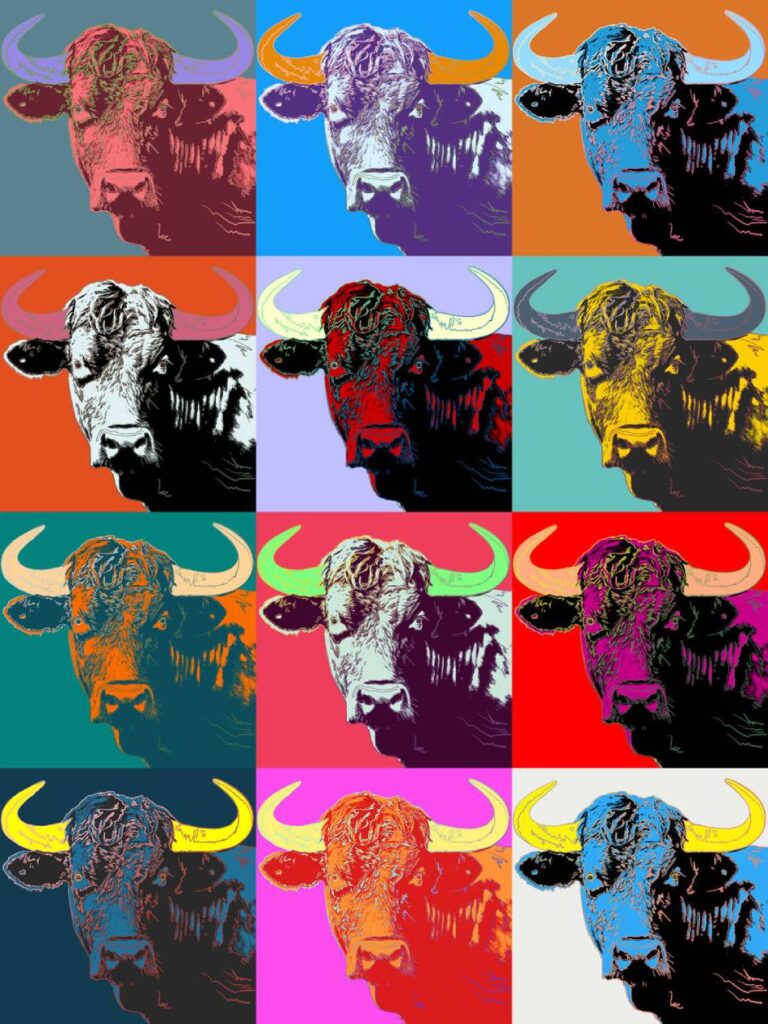
The bull symbolizes power, endurance, and resistance across civilizations, from Minoan Crete to Spanish bullfighting arenas. In Mexican culture, bullfighting, or la corrida de toros, was introduced by the Spanish in the 16th century, blending indigenous and European traditions into a highly controversial yet deeply ingrained spectacle.
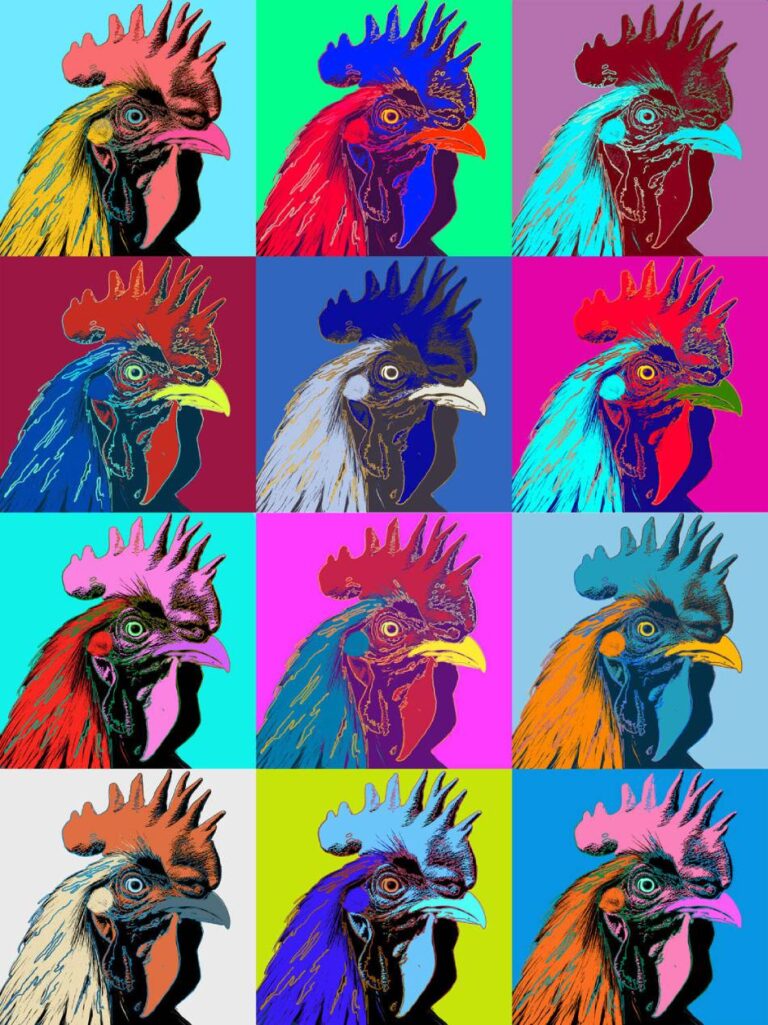
Beasts of Vibrance, Cockpit
2024
Screenprint on cotton paper
60″x80″
1/1
For centuries, roosters have played a symbolic role in Mexican and global culture, representing strength, vigilance, and masculinity. In Mexican tradition, roosters are often associated with cockfighting, which dates back to pre-Columbian times and remains a cultural phenomenon in many regions. The rooster’s crow at dawn is a universal symbol of renewal and defiance, an image deeply embedded in folklore and artistic representation.
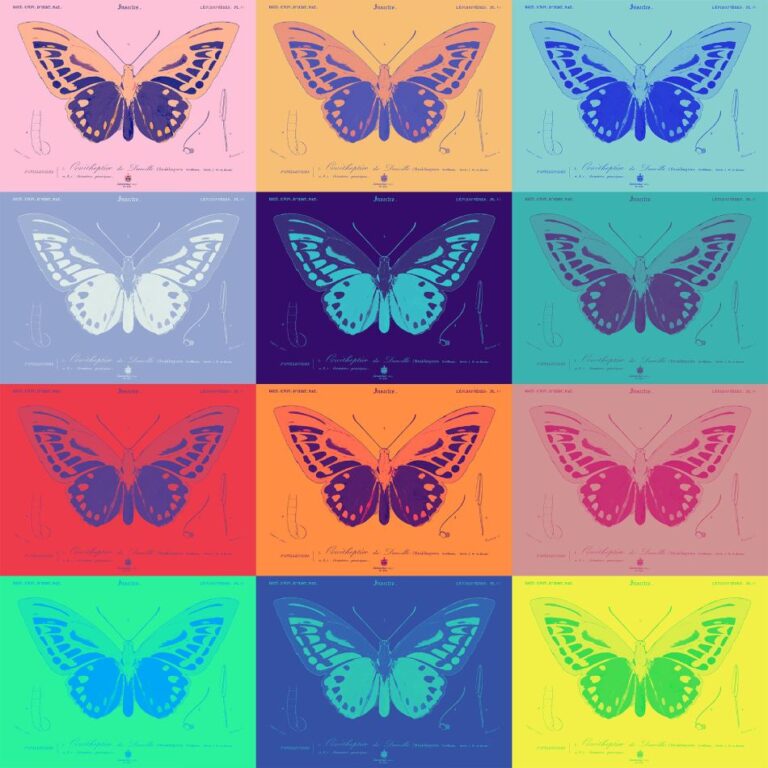
Butterfly Color Study
2022
ARCHIVAL INK PRINT ON 100% COT TON RAG PAPER
40″x40″
10/10
The butterfly has been a symbol of transformation across cultures for centuries, from the Aztecs associating them with souls of the dead to modern conservationists studying their migratory patterns. The Monarch butterfly, in particular, is famous for its multi-generational migration from Canada to Mexico, covering over 3,000 miles.
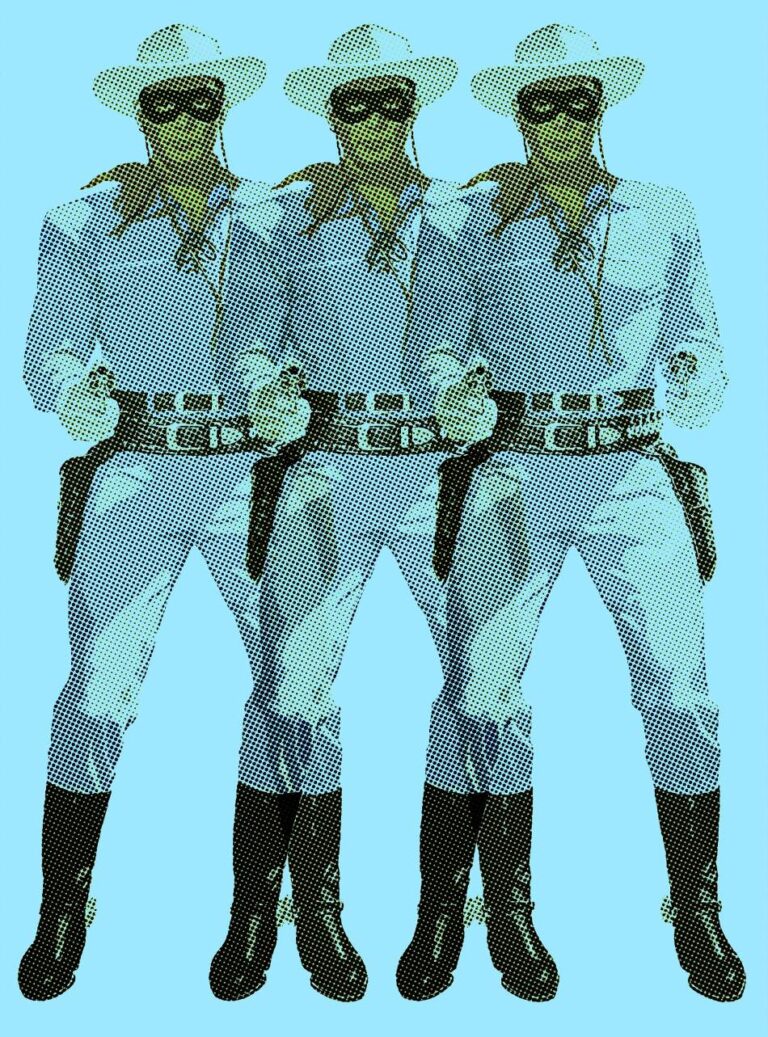
Lone Ranger Halftone
2022
ARCHIVAL INK PRINT ON 100% COT TON RAG PAPER
21”x29” / 40”x55
10/10, 3/3
The Lone Ranger character first appeared in 1933 as a radio show before becoming a hit TV series in the 1950s. Though portrayed as a fictional Western hero, the Lone Ranger is believed to have been inspired by Bass Reeves, a formerly enslaved man who became one of the most legendary U.S. Marshals. The character’s catchphrase, “Hi-Yo, Silver!” remains one of the most famous in pop culture.
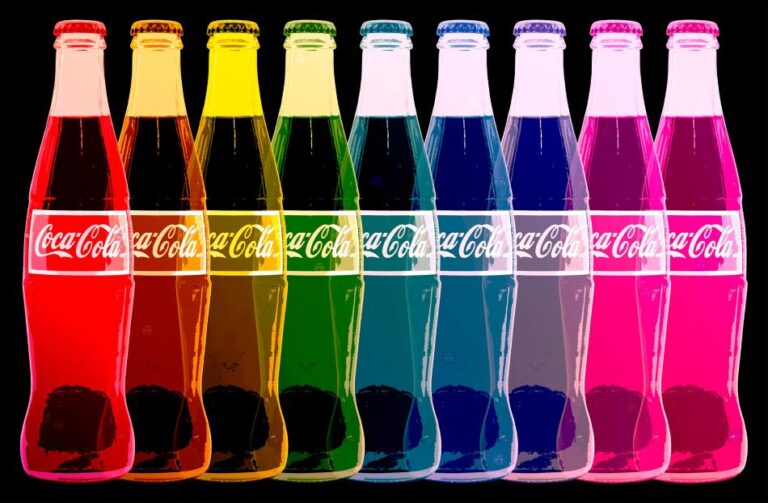
Cola Vistoso
2021
ARCHIVAL INK PRINT ON 100% COT TON RAG PAPER
54″x36″
10/10
Coca-Cola, originally marketed as a patented medicine in 1886, quickly became one of the most recognizable brands in the world. Its signature red and white color scheme has remained unchanged since the 1890s, solidifying its iconic status. In Mexico, Mexican Coke, made with cane sugar instead of high-fructose corn syrup, has developed a loyal following for its distinct taste and nostalgic glass bottle presentation.
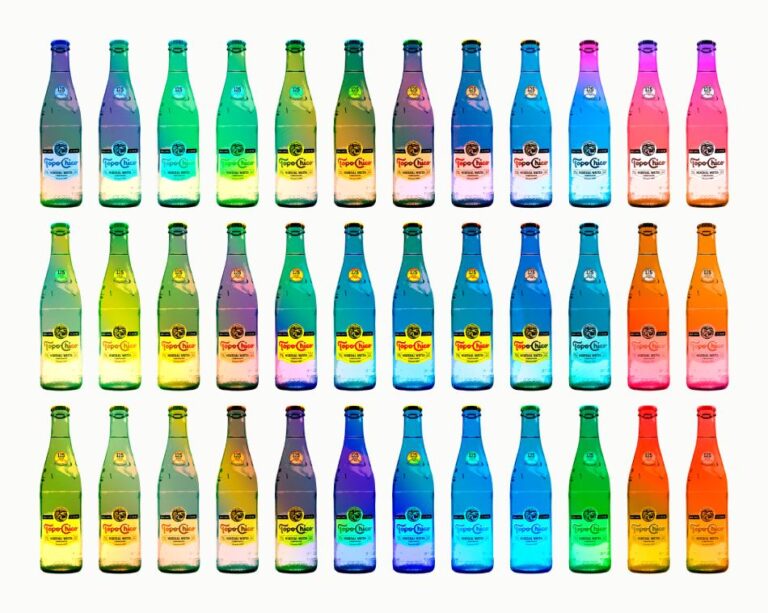
Topo Chico Multiples
2020
ARCHIVAL INK PRINT ON 100% COT TON RAG PAPER
55″x44″
10/10
Topo Chico has been a staple of Mexican culture since 1895, long before becoming an international brand. The mineral water was named after Cerro del Topo Chico, a mountain in Monterrey, Mexico, where the water was first sourced. Over the decades, its logo has undergone eight redesigns. Yet, its name and distinct yellow label have remained unchanged, making it one of Latin America’s most recognizable beverage brands.